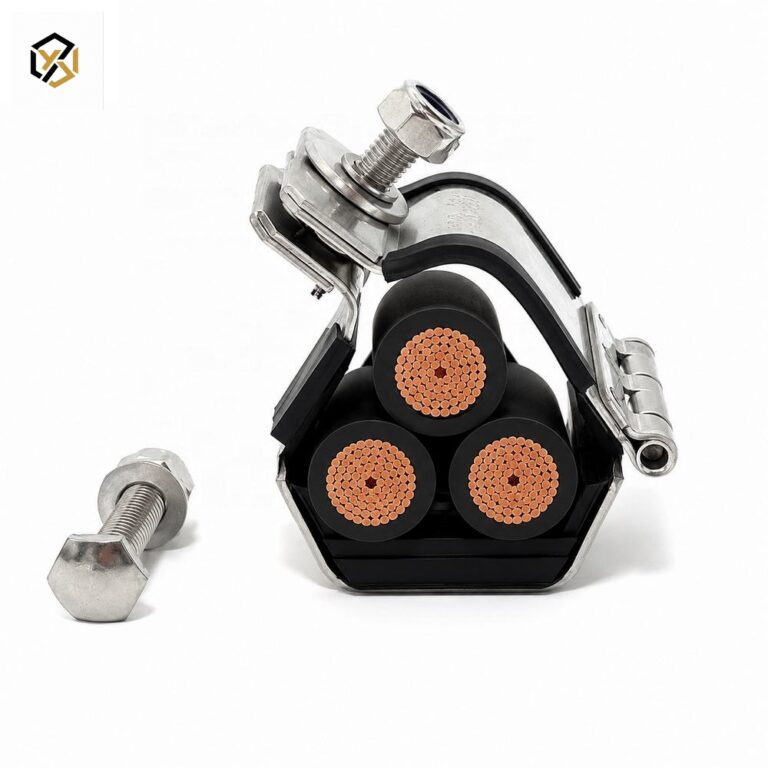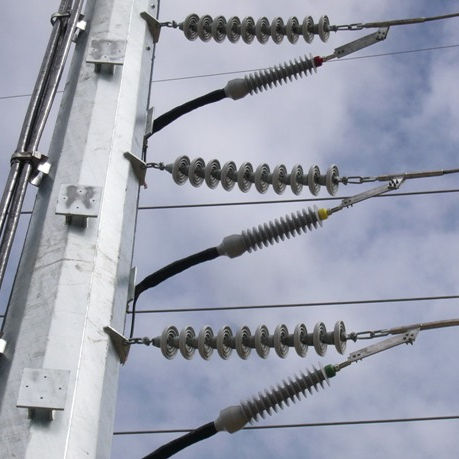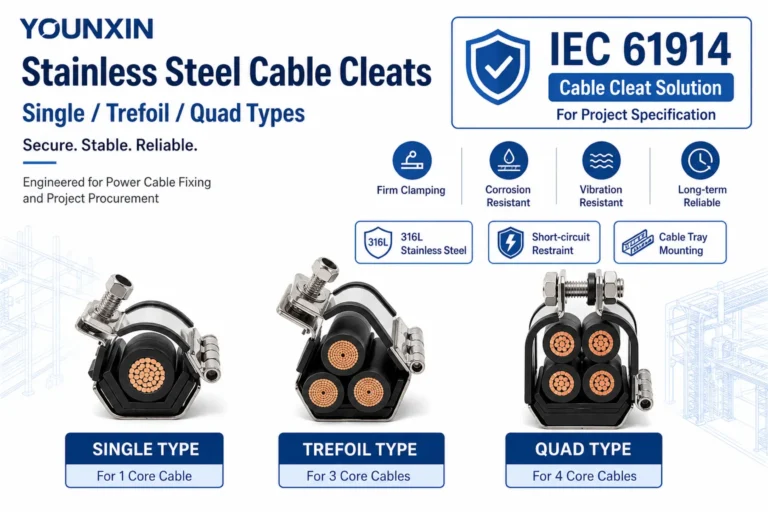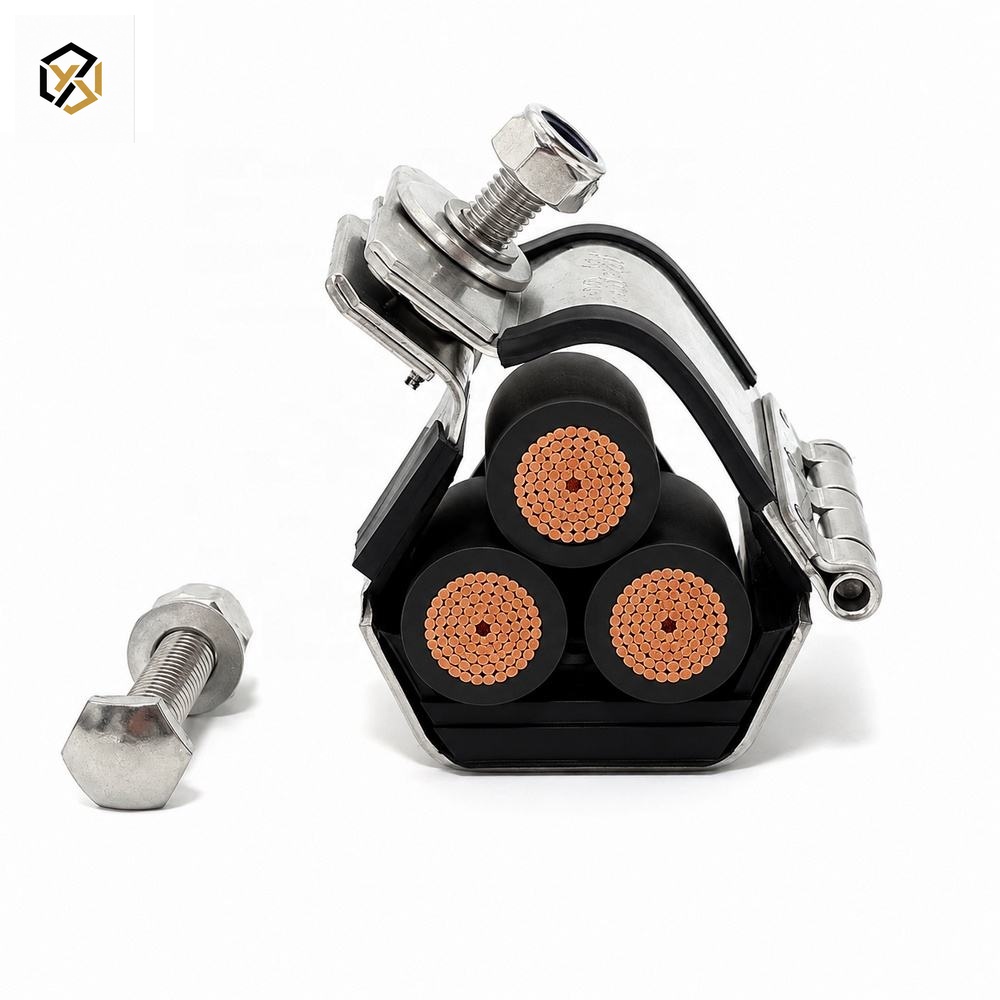
316L stainless steel cable cleats are a selection option for specified power-cable routes in oil, gas, LNG and petrochemical facilities. The purchase decision needs to join three checks: environmental suitability, restraint performance and the actual support arrangement.
Typical locations include process-unit cable ladders, electrical substations, motor feeders, packaged electrical rooms and terminal utility routes. Offshore modules and coastal sites also require a review of salt exposure, temperature, drainage, fastener compatibility and maintenance access.
Where cable cleats enter the oil and gas cable package
| Route | Engineering review | What to send |
|---|---|---|
| Process plant or LNG utility feeder | Fault forces, cable diameter and formation; support and fixing loads. | Cable schedule, fault study and ladder cross-section. |
| Coastal terminal or offshore module | Site corrosion specification, liner compatibility, dissimilar-metal contact and assembly traceability. | Environmental specification, material requirements and mounting drawing. |
| Vertical riser or skid connection | Cable weight, axial retention, support load and local routing constraints. | Vertical-route dimensions, cable weight and support details. |
| Brownfield replacement | Existing cable condition, available mounting space and approved replacement procedure. | Existing cleat photographs, measured dimensions and original part reference. |
Specify the complete 316L assembly
Confirm the cleat body, fixing hardware and liner as a set. Material-grade documentation should identify the offered part or production batch. 316L is the low-carbon form of a molybdenum-containing stainless grade; suitability still depends on exposure and the project corrosion specification.
Provide any required material inspection document, coating or isolation detail and environmental test scope with the RFQ. For hazardous-area installations, include the project’s equipment classification and documentation requirements for review.
Match IEC 61914 evidence to the offered model
IEC 61914:2021 covers cable cleats and intermediate restraints, with electromechanical-force resistance where declared. Ask for the tested model, cable diameter, formation, cleat spacing, mounting surface and fixing assembly. Record peak current, RMS current and duration separately.
Younxin’s document register includes STIEE reports 22ZAS01P04D31-06340 for sample YY-T2405 and 25ZAS01P04D33-47304-2 for sample YY-Q3340. Request the complete report and a documented model correspondence for the proposed supply. A catalogue size or material name alone does not establish that correspondence. See the quality-document and test-report register.
Oil and gas project procurement contexts
The locations below identify relevant purchasing contexts. They are not Younxin supply references, customer endorsements or currently open tenders.
| Market | Relevant project context | RFQ emphasis |
|---|---|---|
| Saudi Arabia | Gas development and processing infrastructure | Document-controlled cleat schedules, ambient conditions and the project’s approved-vendor process. |
| United Arab Emirates | Electrified LNG and industrial utility infrastructure | Cable-restraint duty, corrosion specification and installation interfaces. |
| Qatar | LNG trains and associated utility facilities | Model-specific submittals, cable schedules and restraint evidence. |
| Azerbaijan | Caspian energy facilities and terminal electrification | Coastal exposure, electrical upgrade interfaces and cable-support drawings. |
| Indonesia and Malaysia | Oil, gas and industrial cable-route RFQs | State the actual onshore or offshore site, environment, material specification and required approval route. |
Choose a product and size for technical review
Review FF-T 316L trefoil cable cleats, custom-layout 316L cable cleats and single, trefoil and quad 316L cable-cleat options. The company cable-cleat catalogue provides dimensional references; confirm the current model drawing and evidence for the quoted assembly.
Certifications and Test Reports Available
Younxin can provide certification and test documentation for project procurement and technical review.
DNV / ABS Approvals
Approval documentation is available for applicable cable-cleat models. Confirm the certificate scope for the proposed model with your quotation.
IEC 61914 Test Reports
STIEE short-circuit test reports are available for the tested trefoil and quad cable-cleat assemblies.
Intertek Test Reports
UV-aging and needle-flame test documentation is available for the stated sample models.
Certificates and complete test reports are provided on request. Confirm the covered model, assembly and installation conditions for your project.
Prepare a project cable-cleat RFQ
Start with the cable outside diameter in millimetres, arrangement and quantity. Add the cable schedule or cross-section drawing and delivery destination.
- Circuit and location: power-feeder duty, horizontal or vertical route, indoor or outdoor exposure.
- Fault data: peak short-circuit current, RMS current and fault duration, stated separately.
- Installation: proposed cleat spacing, cable centres, tray or ladder drawing, support material and mounting-hole details.
- Assembly: requested 316 or 316L grade, liner, fasteners, material traceability and applicable test reports.
- Procurement: model quantities, required delivery date, destination and the project’s document schedule.
Request an oil and gas cable-cleat quotation
Oil and gas cable-cleat questions
Is a 316L material designation enough for an offshore cable-cleat order?
Include the site corrosion specification and the complete assembly: body, fasteners, liner, support interface and traceable material records.
How is cleat spacing selected for an oil or gas power feeder?
The responsible design team should assess the cable formation, fault data, selected cleat, supporting structure and applicable report. Send the proposed spacing for review with the fault study.
Can an FF-T size use a report issued for YY-T2405?
Request documented correspondence between the offered assembly and the tested sample, including any differences in size, material, liner, fasteners and installation. Confirm applicability before procurement.
What should an EPC buyer send first?
Send cable outside diameter, formation, quantity, destination and the project specification. Add fault duty, mounting drawings and the required submittal list when available.
For generator, UPS and switchgear routes, also read the data-center power cable-cleat guide.