IEC 61914 Cable Cleat Specification Checklist: Single, Trefoil and Quad Arrangements
When a project buyer asks for cable cleats, the first question should not be only "what size do you have?" A correct IEC 61914 cable cleat specification must confirm cable formation, cable outside diameter, fault level, support structure, environment and installation spacing.
For substations, data centers, cable tunnels, renewable energy projects, railway systems and industrial power distribution, cable cleats are part of the cable restraint system. They help keep power cables in the designed position during normal operation and under short-circuit forces.
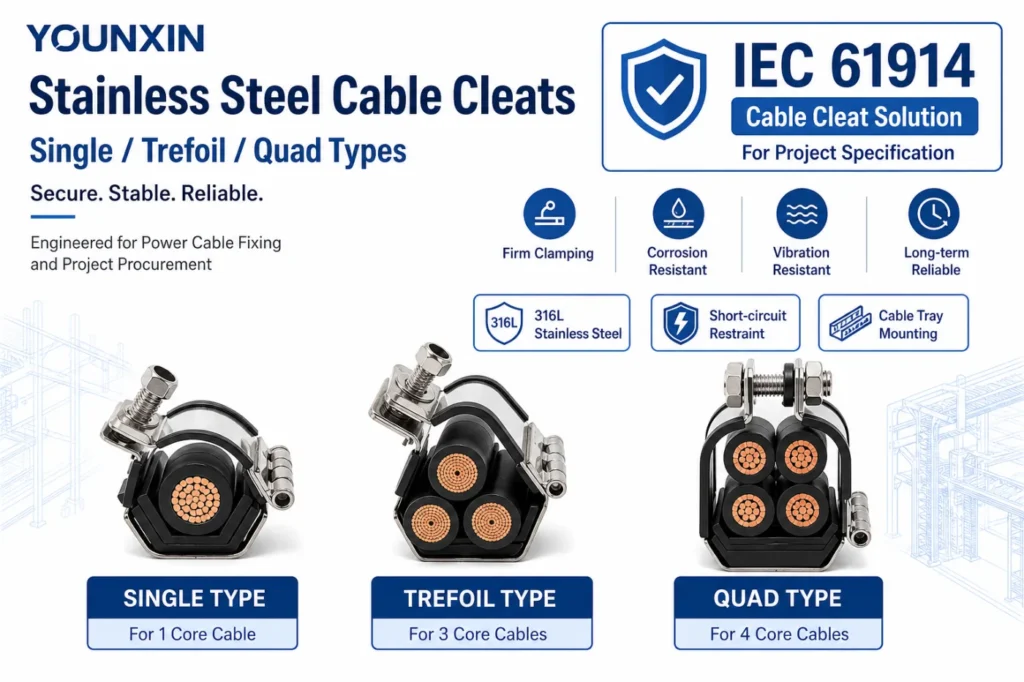
This checklist gives contractors and EPC buyers a practical way to specify single cable cleats, trefoil cable cleats and quad cable cleats before sending an RFQ.

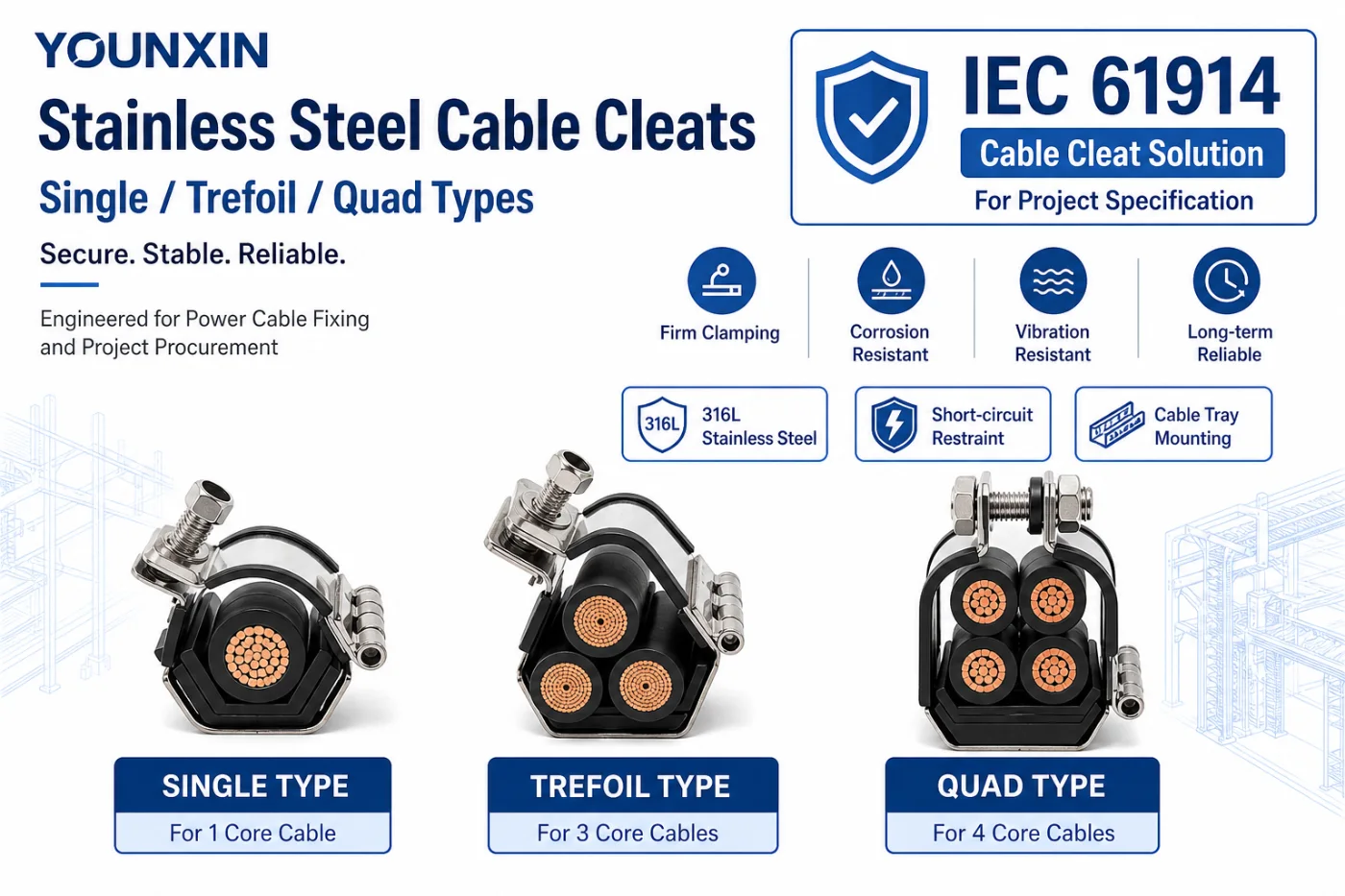
*Younxin blue-white infographic for single, trefoil and quad stainless steel cable cleat arrangements.*
1. Confirm the Cable Formation First
Cable cleat selection starts with the cable arrangement shown in the project drawing.
Single cable cleats are used when each cable is fixed individually. They are common in flat cable routes, separated cable tray runs, switchgear rooms and industrial distribution systems.
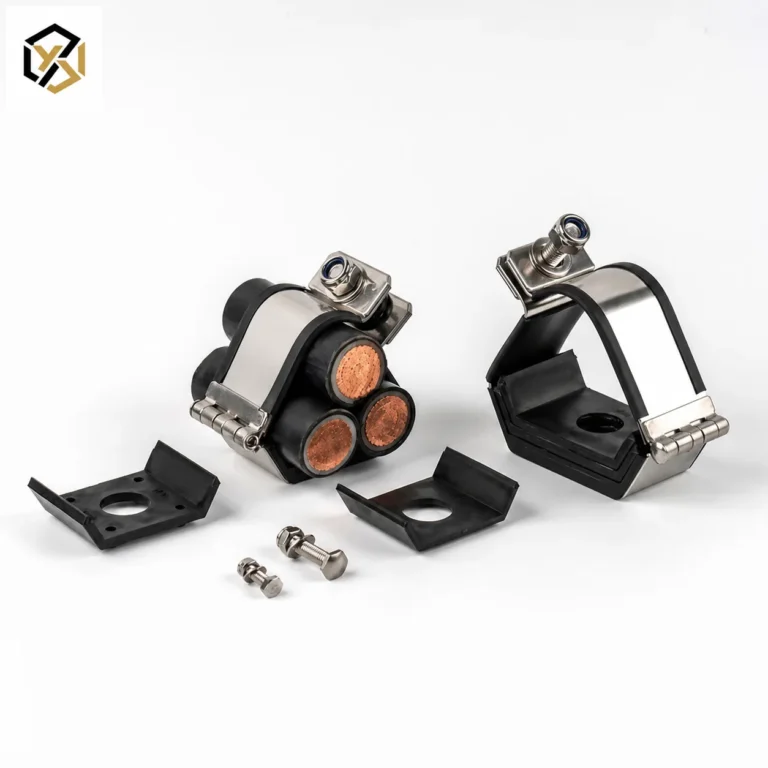
Trefoil cable cleats are used for three single-core cables arranged in triangular formation. This is common for MV and HV circuits where phase conductors are grouped together along the cable route.
Quad cable cleats are used when four cables must be restrained together. This may appear in project-specific routes, parallel feeder systems, neutral conductor arrangements or special cable tunnel designs.
If the drawing is unclear, send a photo or sketch with the RFQ. Choosing the wrong formation can create installation problems even when the cable diameter range looks correct.
2. Provide Cable Outside Diameter, Not Only Cable Size
Cable size such as 1x240 mm2 or 3x300 mm2 is useful, but it is not enough for final cleat selection. The supplier also needs the cable outside diameter.
Include:
- Cable outside diameter in mm
- Number of cables per cleat
- Single-core or multi-core cable type
- Cable sheath material if relevant
- Minimum and maximum diameter if several cable sizes are used
For trefoil and quad cable cleats, small diameter differences can affect the final fit, liner pressure and installation stability.
3. Check Short-Circuit Data and IEC 61914 Requirements
IEC 61914 is widely used as the reference standard for cable cleats. In project procurement, it is important because the cleat may need to restrain cables during short-circuit fault conditions.
Ask the project engineer to confirm:
- Peak short-circuit current
- Fault duration
- Cable cleat spacing
- Required test standard
- Whether a test report is required for the selected model
Do not assume that all stainless steel cable cleats are automatically suitable for every fault level. The model, cable diameter, spacing and installation support all matter.
4. Match Material to the Installation Environment
Many power projects specify stainless steel cable cleats. The most common options are 304, 316 and 316L stainless steel.
Use 304 stainless steel cable cleats for general indoor or mild outdoor environments.
Use 316 or 316L stainless steel cable cleats for coastal, offshore, tunnel, chemical plant, high humidity or corrosive environments.
Need equipment matched to your project?
For metro tunnels, marine projects, solar farms near coastal areas and outdoor substations, 316L stainless steel is often a stronger choice. The final requirement should follow the corrosion class, project specification and budget.
5. Confirm the Mounting Structure
The same cable cleat can behave differently depending on how it is mounted. Before quotation, confirm whether the cleat will be installed on:
- Cable tray
- Cable ladder
- Steel bracket
- Mounting rail
- Concrete trench support
- Customized frame or channel
Also confirm the hole size, bolt type, mounting pad requirement and whether rubber liners or sheath protection pads are required.

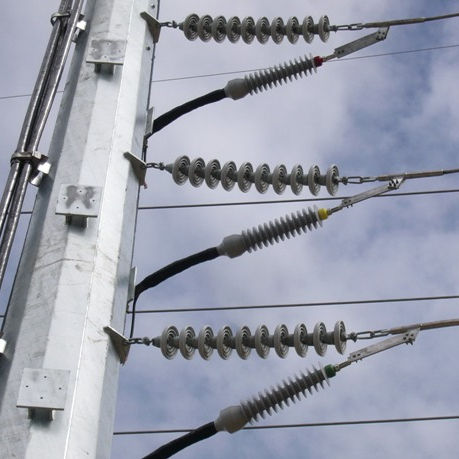
*Field installation photo showing stainless steel cable cleats fixed on cable tray support for power cable routes.*
6. RFQ Data That Reduces Repeated Communication
For overseas projects, repeated supplier communication often delays quotation. A complete cable cleat RFQ should include:
- Project type: substation, data center, tunnel, renewable energy, railway or industrial plant
- Cable formation: single, trefoil, quad or special arrangement
- Cable outside diameter
- Voltage level
- Short-circuit current and duration
- Installation spacing
- Material requirement
- Mounting method
- Quantity
- Required documents
- Drawings or photos
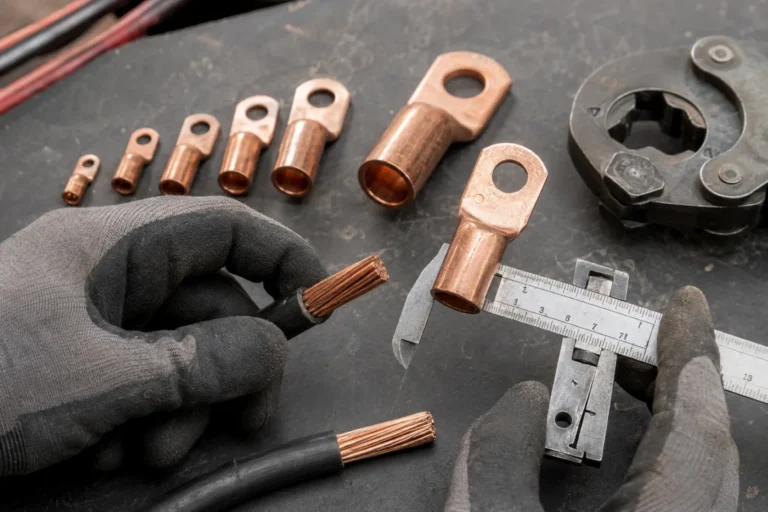
When the buyer sends one BOM list and one drawing package, Younxin can review the cable cleat requirement together with cable lugs, terminations, glands, grounding accessories and cable protection products. This supports one-stop sourcing and reduces communication cost across multiple suppliers.
7. Example Procurement Scenario
An EPC contractor is preparing a cable accessories package for a 33kV substation and data center power room. The initial BOQ only lists "cable cleats" without formation details.
After reviewing the drawings, the project team finds three different requirements:
- Trefoil cable cleats for 33kV single-core feeder cables
- Single cable cleats for auxiliary cable tray routes
- Stainless steel cleats with rubber liners for high-humidity outdoor cable areas
Instead of asking several suppliers separately, the buyer can send one list to Younxin. We check the cable diameter, formation and mounting structure, then prepare a combined quotation for cable cleats and related cable accessories.
This approach helps reduce missing items, repeated technical questions and inconsistent material specifications.
8. Quick Specification Template
Copy this template when sending an inquiry:
Cable formation: Single / trefoil / quad Cable OD: ___ mm Voltage level: ___ kV Short-circuit requirement: ___ kA for ___ second(s) Cable cleat spacing: ___ mm Material: 304 SS / 316 SS / 316L SS / other Mounting: Cable tray / ladder / rail / bracket / trench Environment: Indoor / outdoor / coastal / tunnel / offshore / chemical Quantity: ___ pcs Documents required: Datasheet / drawing / test report / certificate
FAQ
What is the first parameter for cable cleat selection?
The first parameter is cable formation: single, trefoil, quad or another arrangement. Cable outside diameter and short-circuit data should be confirmed immediately after that.
Why is IEC 61914 important?
IEC 61914 is the main international standard used to evaluate cable cleats for restraint and mechanical performance. Many power project specifications refer to it when short-circuit performance is required.
Are trefoil cable cleats only for medium-voltage cables?
No. Trefoil cleats can be used wherever three single-core cables are installed in triangular formation, depending on the project design. They are common in MV and HV routes.
Should I choose 304 or 316L stainless steel?
304 stainless steel is suitable for many general environments. 316L stainless steel is usually preferred for coastal, offshore, tunnel, chemical, humid or more corrosive environments.
Can Younxin quote cable cleats together with other cable accessories?
Yes. Send your BOM list, drawings or cable schedule. Younxin can help match cable cleats with cable lugs, terminations, glands, grounding accessories and cable protection products for one-stop procurement.
Conclusion
A good IEC 61914 cable cleat specification is not only a product name. It is a complete set of engineering data: cable formation, outside diameter, fault level, material, mounting structure and quantity.
For project buyers, sending these details at the beginning helps suppliers recommend the correct single, trefoil or quad cable cleats faster. It also reduces communication cost when multiple cable accessories must be purchased for the same power project.