The words “switch,” “breaker” and “fuse” are sometimes used loosely in international project communication. On a 30kV or 35kV overhead line, however, these devices perform different functions. Confusing them can create a serious gap between the BOM, packing list and installation plan.
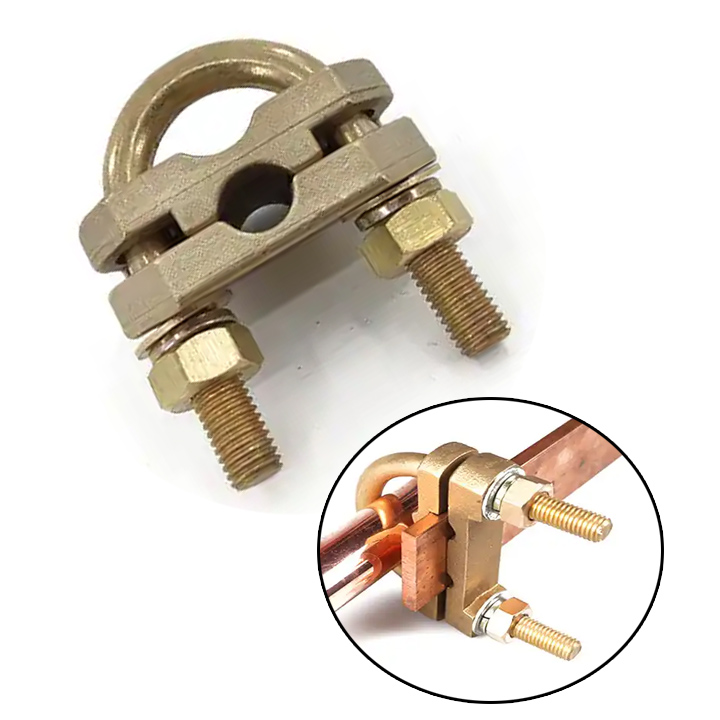
During a Burundi project equipment check, a photo of isolator mounting accessories was initially compared with the fuse protection device expected at site. The equipment was not missing; the images showed two different parts of the supply package. The clarification highlighted an important procurement lesson: identify each pole-top device by function, construction and rating—not by an informal name alone.
Gang-operated isolator: a visible isolation point
A gang-operated isolator, also called a disconnector, opens all three phases together through a mechanical operating linkage.
Its main purpose is to:
- create a visible open point;
- isolate a line section or transformer for maintenance;
- support safe operating procedures when used with the complete system.
An isolator is not automatically designed to interrupt short-circuit current. Some designs may switch limited load or charging current when specifically rated, but a plain disconnector should not be described as a circuit breaker.
For project selection, confirm:
- voltage class and insulation level;
- rated continuous current;
- short-time withstand current;
- manual operating mechanism and rod length;
- pole-mounting brackets and linkage;
- phase spacing;
- whether load-breaking capability is required.
Drop-out fuse cutout: visible overcurrent protection
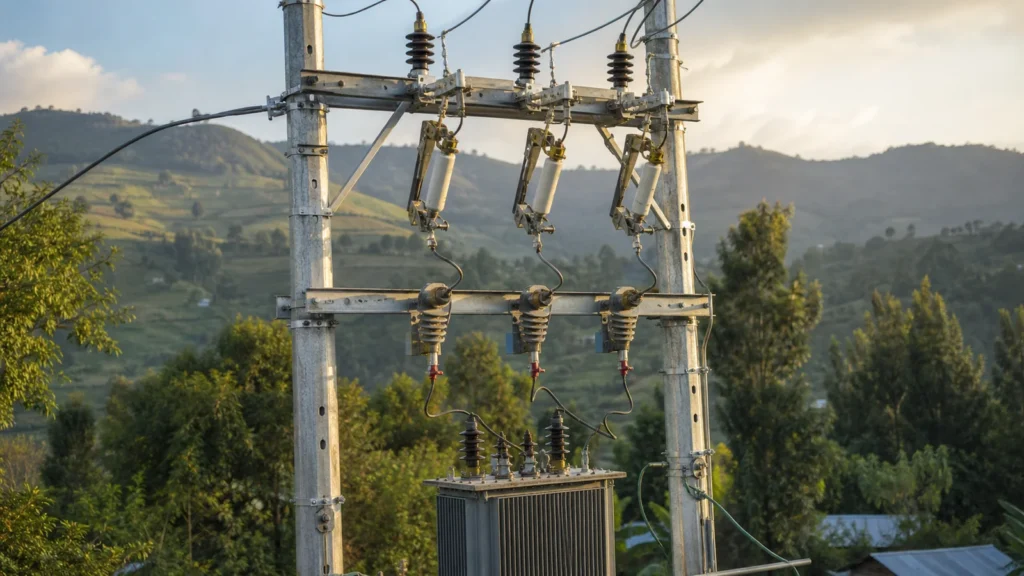
A drop-out fuse cutout contains a replaceable fuse link inside a fuse tube. When the link operates, the tube drops into an open position, giving a visible indication.
It is commonly used to protect:
- pole-mounted or ground-mounted distribution transformers;
- branch feeders;
- small distribution line sections.
The fuse cutout supplied for the Burundi package included the corresponding fuse links. This is an important scope detail: supplying the cutout body without confirming the fuse link can leave the device incomplete for commissioning.
The fuse-link rating should be coordinated with transformer capacity, primary current, inrush, overload requirements and upstream protection.
Circuit breaker or recloser: fault interruption and control
A pole-mounted vacuum circuit breaker or automatic recloser is a different class of equipment. Depending on the design, it can interrupt fault current, trip through protection relays and perform automatic reclosing.
It is typically considered when a project requires:
- automatic fault clearing;
- protection relay functions;
- remote control or SCADA;
- current and voltage sensing;
- reclosing sequences;
- event and fault records.
A circuit breaker cannot be assumed to be included merely because the client used the word “breaker” for a fuse cutout in conversation. The single-line diagram and technical specification should resolve the intended device.
Need equipment matched to your project?
Surge arrester: protection against overvoltage
A surge arrester limits transient overvoltage caused by lightning or switching. It works alongside switching and overcurrent devices but does not replace them.
For correct selection, check:
- rated voltage;
- maximum continuous operating voltage;
- nominal discharge current;
- line-to-earth voltage;
- system earthing method;
- creepage distance and pollution conditions;
- mounting bracket, lead and grounding accessories.
The physical lead arrangement matters. Long or poorly routed connections can reduce protection effectiveness, so the arrester position should be coordinated with the protected transformer or equipment.
How the devices work together
A simplified transformer branch may use the following functional sequence:
- a line isolation device for maintenance;
- a fuse cutout for transformer primary overcurrent protection;
- surge arresters connected close to the transformer terminals;
- the distribution transformer;
- low-voltage protection and distribution.
The actual order and configuration must follow the approved single-line diagram and local utility practice.
A photo checklist for equipment confirmation
Before shipment, photograph each device from several angles and include:
- overall equipment view;
- nameplate and rating label;
- mounting brackets;
- operating mechanism;
- fuse tubes and fuse links;
- terminals and connectors;
- packing label linked to the BOM item.
Do not photograph only loose mounting accessories. A buyer reviewing one partial image may reasonably believe the principal device is absent.
Questions to ask before quotation
For each pole-top protection item, confirm:
- What function is required—visible isolation, load switching, overcurrent protection or automatic fault interruption?
- What are the nominal system voltage and highest equipment voltage?
- What continuous and fault-current ratings apply?
- Is the equipment manually operated or remotely controlled?
- Which mounting brackets and operating accessories are included?
- Are fuse links, counters, disconnectors or sensors required?
- Which IEC or utility standard applies?
Use function-based names in the BOM
Clear descriptions reduce disputes and purchasing errors. Instead of writing only “breaker,” use a complete name such as:
- 33kV gang-operated isolator with manual operating mechanism;
- 33/35kV drop-out fuse cutout with fuse link;
- 40.5kV pole-mounted vacuum circuit breaker with controller;
- metal-oxide surge arrester with mounting and grounding accessories.
Younxin can review project photos, drawings and mixed-language BOQs to identify the required pole-top equipment and prepare a matched supply scope.
FAQ
Is a fuse cutout a circuit breaker?
No. Both can interrupt abnormal current, but they use different operating principles and provide different control and protection functions.
Can an isolator break load current?
Only if the specific device is designed and rated for that duty. A standard disconnector should primarily be treated as an isolation device.
Should fuse links be ordered separately?
That depends on the supply scope. Always state the required fuse-link quantity and rating in the BOM and packing list.