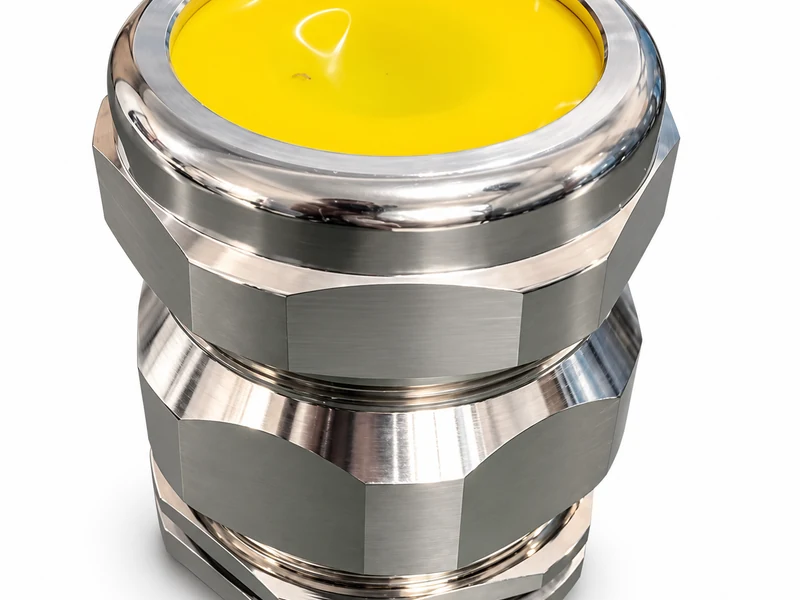
Overview
The Younxin Ex db Armoured Compound Barrier Cable Gland is configured for armoured power, control and instrumentation cables entering hazardous-area electrical equipment. It combines mechanical armour termination with a curing compound barrier formed around the insulated cable cores. This construction is intended for projects that specify a barrier-type cable entry and require the cable, gland and enclosure interface to be reviewed as one system.
Every gland is selected against the actual cable construction and enclosure entry. The final explosion-protection marking, certificate scope, ingress protection, service temperature, material and size are confirmed for the ordered configuration before approval or installation.
Key Features
- Compound barrier formed around the individual insulated cores at the cable-entry interface.
- Integrated armour clamping and cable retention for a project-matched mechanical connection.
- Selection based on the cable inner bedding, outer sheath and armour dimensions rather than nominal cable size alone.
- Configurations can be reviewed for steel wire, steel tape, wire braid and aluminium armour constructions.
- Metal body and thread options support different enclosure, corrosion and installation requirements.
- Optional shroud, earth tag, locknut and entry sealing accessories can be supplied as a coordinated set.
Materials and Entry Threads
The fields below are typical project-selection options. Availability and the applicable approval scope must be confirmed for the exact size and configuration.
| Body material | Nickel-plated brass or stainless steel; specify the required stainless grade and corrosion environment. |
|---|
| Entry thread | Metric, NPT or G thread options can be reviewed to suit the enclosure entry. |
|---|
| Armour interface | Selected to the armour type, armour diameter and wire or tape thickness. |
|---|
| Barrier system | Project-matched curing compound and barrier components; installation procedure is supplied with the approved configuration. |
|---|
| Outer cable seal | Matched to the cable outer-sheath diameter and service conditions. |
|---|
Applications
- Oil and gas production, processing and storage facilities
- LNG terminals, petrochemical plants and tank farms
- Offshore modules, marine systems and shipbuilding projects
- Power generation and heavy process-industry installations
- Hazardous-area junction boxes, motors, control stations and instrument enclosures
Application suitability depends on the project hazardous-area classification, cable construction, enclosure certification, environmental exposure and installation standard.
Selection Data Required
For an accurate quotation and technical review, please send:
- Cable manufacturer, cable type or datasheet
- Number of cores and conductor size
- Diameter over inner bedding or under armour
- Overall cable diameter over the outer sheath
- Armour type, armour diameter and wire or tape thickness
- Enclosure entry thread, thread size and required engagement length
- Preferred body material and site corrosion conditions
- Ambient and operating temperatures
- Required hazardous-area marking, approval scheme and project specification
- Required accessories, quantity and document package
Accessories
A coordinated accessory set may include a protective shroud, earth tag, locknut, sealing washer or O-ring, and approved adaptor or reducer where the enclosure entry requires one. Accessory material and size are matched to the selected gland and installation.
Frequently Asked Questions
What is the difference between a compound barrier gland and a double-seal gland?
A compound barrier design forms a cured barrier around the individual cable cores. A double-seal design normally uses compression seals on the inner bedding and outer sheath. The project specification, cable construction and applicable installation rules determine which design is appropriate.
Which armoured cable types can be reviewed?
Configurations can be reviewed for SWA, steel-tape armoured, braided and aluminium-armoured cables. The armour clamp must be selected from the actual armour construction and dimensions, so a cable datasheet or sample is recommended.
What information is needed to select the correct gland?
Please provide the cable inner-bedding diameter, outer-sheath diameter, armour type and dimensions, number of cores, enclosure thread, material requirement, service temperature and required hazardous-area approval.
Is IECEx or ATEX documentation included?
The required approval scheme must be stated at the enquiry stage. Certification is specific to the model, size, material and configuration. Younxin will confirm the applicable marking and provide only the documents that cover the supplied item.
Send your cable datasheet and enclosure entry details for gland selection, drawing confirmation and a project quotation.