Pole bands, crossarms, bolts and line fittings may spend decades in rain, dust and industrial pollution. Hot-dip galvanizing is the normal corrosion barrier for much of this steelwork, but the words “HDG finish” on a quotation do not define the full requirement.
Good procurement connects the coating requirement with the base steel, component design, threads, inspection method and packing.
During hot-dip galvanizing, prepared steel is immersed in molten zinc, producing bonded zinc-iron alloy layers with an outer zinc surface. Unlike paint, the coating reaches many edges and internal surfaces when the component is designed and processed correctly.
The zinc protects the steel both as a barrier and sacrificially at small damaged areas. Service life still depends on coating mass, local atmosphere, drainage and handling.
Galvanizing cannot correct poor fabrication. Confirm the steel grade, dimensions, welding, holes and tolerances before coating. Closed sections need properly designed vent and drain holes. Overlapping surfaces and narrow gaps can trap process fluids or leave uncoated areas.
For fabricated crossarms and brackets, drawings should show which dimensions are critical after galvanizing. Welding spatter and sharp burrs should be removed before surface preparation.
The purchase order should reference the project’s approved standard and required coating class or minimum values. Avoid copying one thickness number across every item. Material thickness, product type, centrifuged fasteners and local utility rules may lead to different requirements.
If the project is in a coastal, humid, industrial or tropical environment, state that clearly. The project engineer may require a heavier coating, duplex paint system or different material for selected small parts.
Fresh galvanized hardware does not need to look like chrome. Appearance varies with steel chemistry and cooling. The useful inspection questions are:
Color variation alone is not a reliable rejection reason if coating performance and dimensions meet the agreed requirements.
Coating thickness is normally checked at representative positions with a calibrated gauge, following the referenced inspection procedure. The sampling plan should be agreed before shipment, especially for large batches of bolts, crossarms or pole bands.
Adhesion problems, peeling or flaking are more serious than a cosmetic difference. The test method and acceptance criteria should come from the applicable project standard rather than an improvised site test.
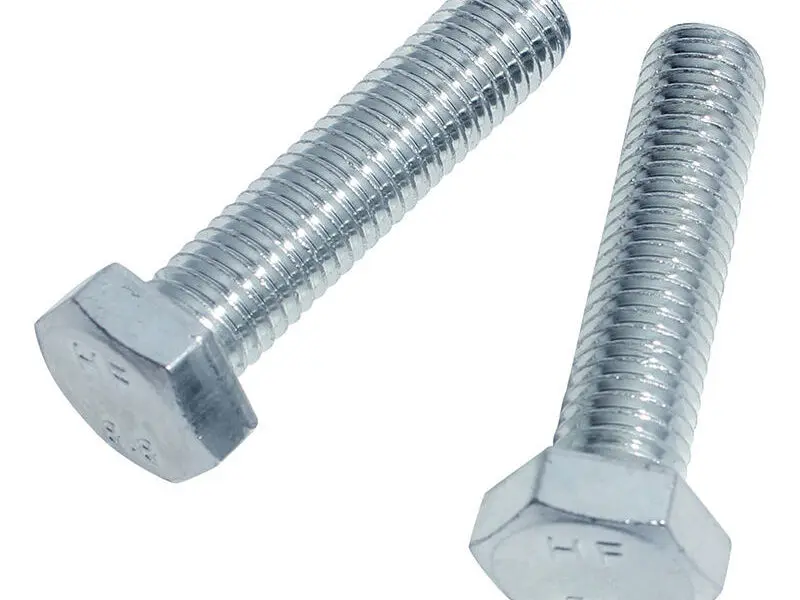
Threads are a frequent source of trouble. Zinc adds thickness, so nuts and threaded parts must be manufactured and processed as a matched system. Buyers should state whether bolts, nuts and washers are supplied as assemblies and what thread fit is required after coating.
Running an unsuitable tool over a coated thread can remove protection. Repairs and thread treatment should follow the approved manufacturing procedure.
White corrosion products can develop when newly galvanized items are packed wet with little air circulation. It is often a storage and transport problem rather than evidence that the steel was not galvanized.
Hardware should be dry before packing, protected from trapped condensation and arranged so water cannot remain between flat surfaces. Long sea routes and humid inland storage deserve specific packing instructions.
Heavy steel parts can damage each other during container transport. Use stable bundles, suitable separators and protected contact points. Small bolts, washers, split pins and linkage parts should be packed and labeled by assembly or pole type.
For a mixed overhead-line shipment, labels should connect each package to the BOQ item and drawing. This reduces both coating damage and installation confusion.
Depending on the contract, the supply file may include:
Agree on the document list before production. Asking for an unplanned report after the container is loaded can delay release.
Send:
Younxin supplies crossarms, pole bands, fasteners, clamps and overhead line fittings with project-specific drawing review, galvanizing inspection, packing and documentation support. Send the hardware schedule and drawings together so fabrication and coating requirements can be checked as one scope.
Related product category: Browse Younxin’s pole line hardware for crossarms, brackets, fasteners and mounting accessories.
No. Brightness can vary. Coverage, coating compliance, adhesion, usable dimensions and freedom from harmful defects are more meaningful.
Not automatically. Requirements can depend on component type, material thickness, processing method and the referenced standard.
Pack dry components with ventilation or moisture control appropriate to the route, avoid tight wet contact between surfaces and store bundles so water drains away.
Contact sales