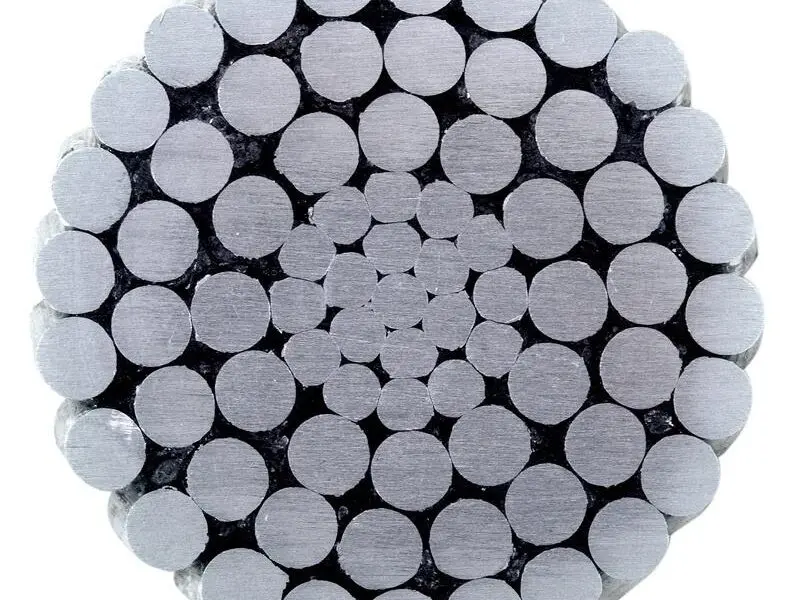
“ACSR 120” looks like a useful specification until a fittings supplier has to quote it. Different standards and conductor constructions can produce different overall diameters, strand arrangements and mechanical ratings under similar short names. A clamp chosen only from the nominal aluminum area may fit poorly or carry the wrong load.
Reliable ACSR conductor fittings selection starts with the actual conductor datasheet and the pole function.
Ask for the full conductor designation, applicable standard, strand construction, overall diameter, unit weight and rated tensile strength. If the project uses a code name such as Dog, Wolf, Panther or Drake, keep the numeric data in the same document. Code names are helpful, but the datasheet is the final reference.
Also confirm whether the conductor is conventional ACSR, ACSR/AW or another construction. The steel core and surface behavior can affect the approved fitting and installation method.
Suspension clamps support the conductor on tangent structures and allow controlled movement. The clamp groove must suit the conductor diameter, while the mechanical rating must suit the span, line angle and calculated loads.
A clamp that is too small can damage outer aluminum strands. One that is too large may not grip or support the conductor correctly. Where armor rods or preformed protection rods are used, the supplier needs to know whether the clamp range is based on the bare conductor or the protected assembly.
The connection above the clamp also matters. Confirm the insulator-string hardware, socket or clevis interface and the required orientation.
Dead-end fittings transfer longitudinal load at terminal, section and angle structures. Their selection cannot be copied from a suspension assembly.
State the conductor rated tensile strength, required holding strength, structure type and whether the clamp is compression, bolted wedge or preformed. Compression dead ends may require matching steel and aluminum components plus the correct dies. Preformed sets must match the conductor diameter and strand direction exactly.
Include jumper terminals and connection plates in the review. A strong dead-end body is not a complete assembly if the jumper cannot connect to the next device.
Parallel-groove clamps are commonly used for taps and jumper connections. Selection depends on the main and branch conductor materials and size ranges. Aluminum-to-aluminum and bimetallic connections should not be treated as the same item.
For a transformer tap, the path may include the line conductor, PG clamp, jumper conductor, terminal connector and equipment terminal. Confirming the complete path prevents a mismatch at the final palm or bolt hole.
Mid-span joints, full-tension compression joints and repair sleeves have different functions. A repair sleeve intended for damaged outer strands is not a substitute for a full-tension joint.
For compression products, provide the conductor construction and required joint type. The installation team also needs the approved compression sequence and die information. Supplying the fitting without the correct tool reference creates avoidable site risk.
The clearest purchasing method is to group fittings by structure rather than placing every item in one long list. Typical groups include:
Each group should show the assembly quantity per pole and the number of poles. This makes it easier to check shackles, links, yoke plates, bolts and split pins that are often missed in item-by-item procurement.
Steel hardware normally requires a corrosion-protection specification. State whether hot-dip galvanizing is required and identify coastal, industrial, high-humidity or other aggressive environments. Stainless split pins or special fasteners may be specified even when the main fittings are galvanized steel.
Packing should protect galvanized surfaces and keep complete sets together. Small hardware packed by pole type is easier to issue at site than mixed loose cartons.
For an accurate overhead line fittings quotation, send:
Younxin can review ACSR conductors, suspension clamps, dead-end clamps, PG clamps, joints, insulators and linkage hardware as connected sets. Send the conductor datasheet and pole drawings with the BOQ so the interfaces can be checked before production.
Related product page: Review the ACSR 400/50 overhead conductor specification and matching RFQ notes.
No. Overall diameter, construction, mechanical load and any armor rods must also be considered.
Some bolted products cover a defined range, but preformed and compression fittings are much more specification-dependent. Use the manufacturer’s approved range for the actual conductor.
It exposes missing connection hardware and gives the installation team complete, countable sets for each structure.